


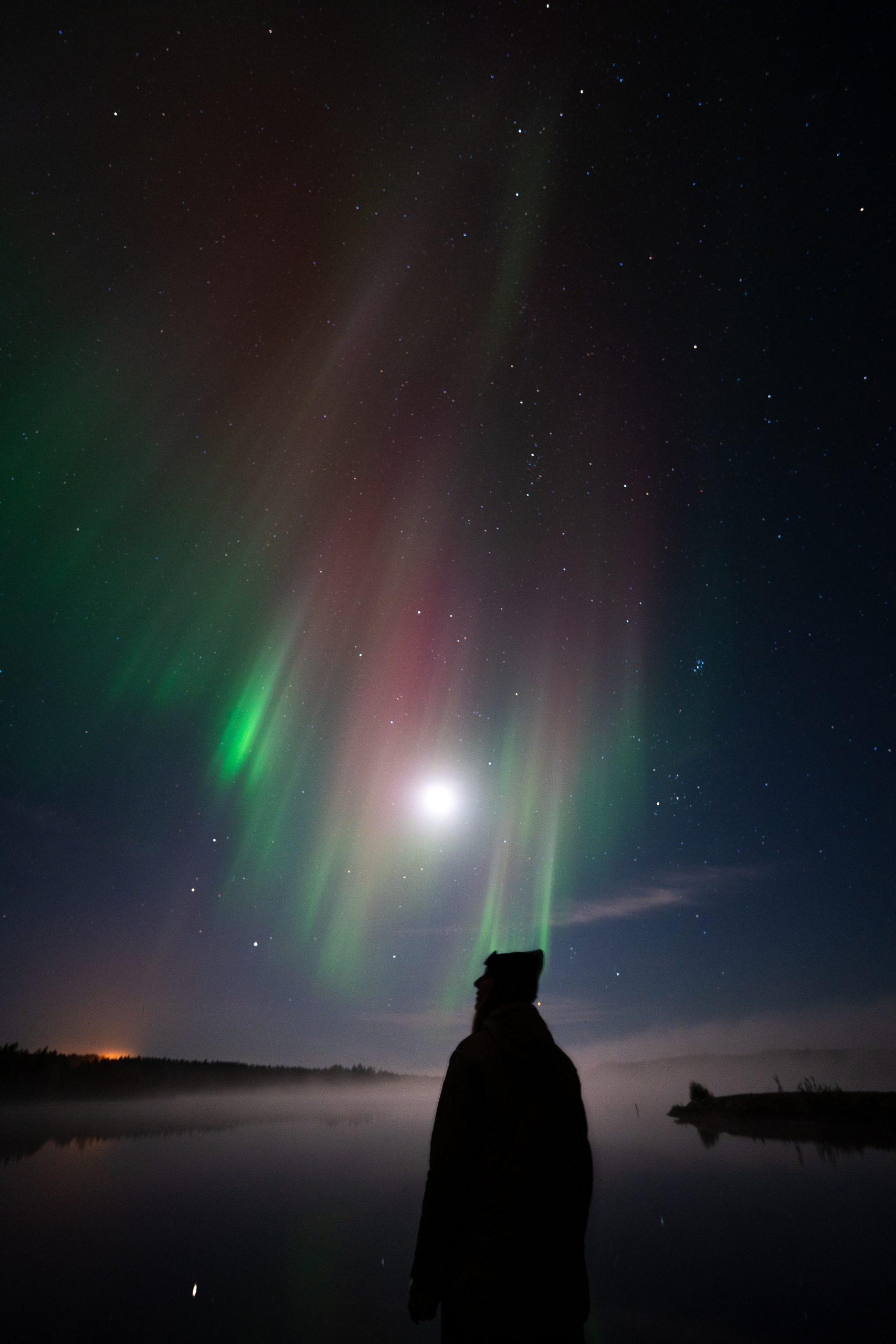
The Aurora Borealis is a natural light show that appears high above us in the ionosphere, between about 80 km and 600 km altitude. It is the visible result of charged particles from the Sun interacting with the Earth’s magnetic field and colliding with gases in our upper atmosphere.
The Science and the Mystery of the Northern Lights
What is an Aurora?
THE AURORA BOREALIS OR NORTHERN LIGHTS
is one of the most breathtaking sights on Earth
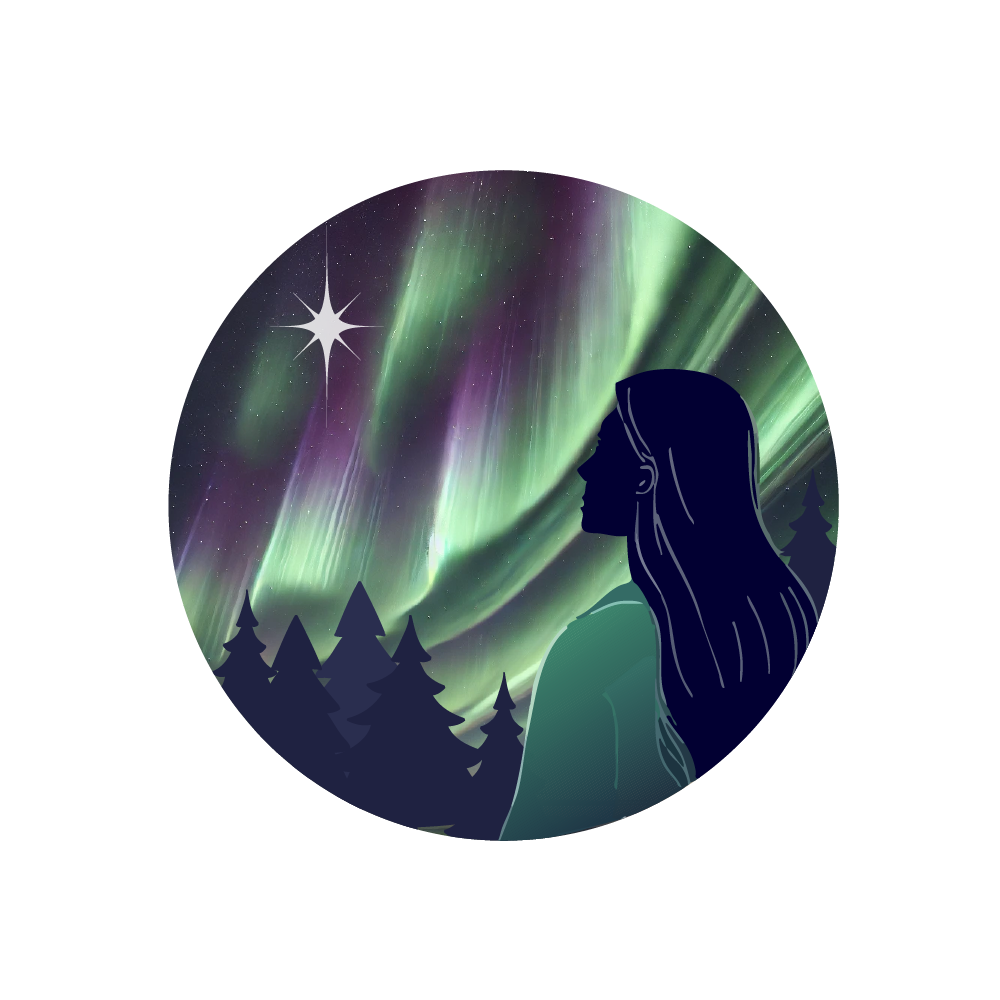
The Sámi people tell stories of foxes running across the snow, their tails sweeping sparks into the sky creating the lights we see today.
What is it?
How it Happens
The Solar Wind
The Sun continuously releases a stream of charged particles (mainly electrons and protons) known as the solar wind. Occasionally, this flow becomes stronger during events like solar eruptions or coronal holes.
Earth’s Magnetic Shield
Earth has a magnetic field (the magnetosphere) that usually deflects most of these solar particles. However, when conditions allow, particularly when the solar wind’s magnetic field is oriented southward, magnetic reconnection can occur, opening pathways for some particles to enter.
The Journey to the Poles and Light Emission
These particles are guided along Earth’s magnetic field lines toward the polar regions. When they collide with gases in the upper atmosphere (like oxygen and nitrogen), they excite the atoms and molecules, which then emit light as they return to their normal energy states. This produces the beautiful colours of the aurora.
How it Happens
- The solar wind
The Sun is always releasing a stream of charged particles — electrons and protons — called the solar wind. Sometimes this wind becomes stronger, during events like solar eruptions or when coronal holes open on the Sun. - Earth’s magnetic shield
Earth has a magnetic field, the magnetosphere, which usually protects us by deflecting most of these particles. But when the solar wind is intense, or when its magnetic field turns southward, “doors” in our shield open, allowing some of the particles to enter. - The journey to the poles
Those particles are then guided along the Earth’s magnetic field lines toward the polar regions. That’s why auroras are seen mainly in the Arctic (aurora borealis) and the Antarctic (aurora australis). - The collision in the ionosphere
When these particles finally dive into the ionosphere, they collide with oxygen and nitrogen atoms. These collisions transfer energy, exciting the atoms. As the atoms relax back to normal, they release light. That’s the glow we see in the sky.
Colors & Shapes
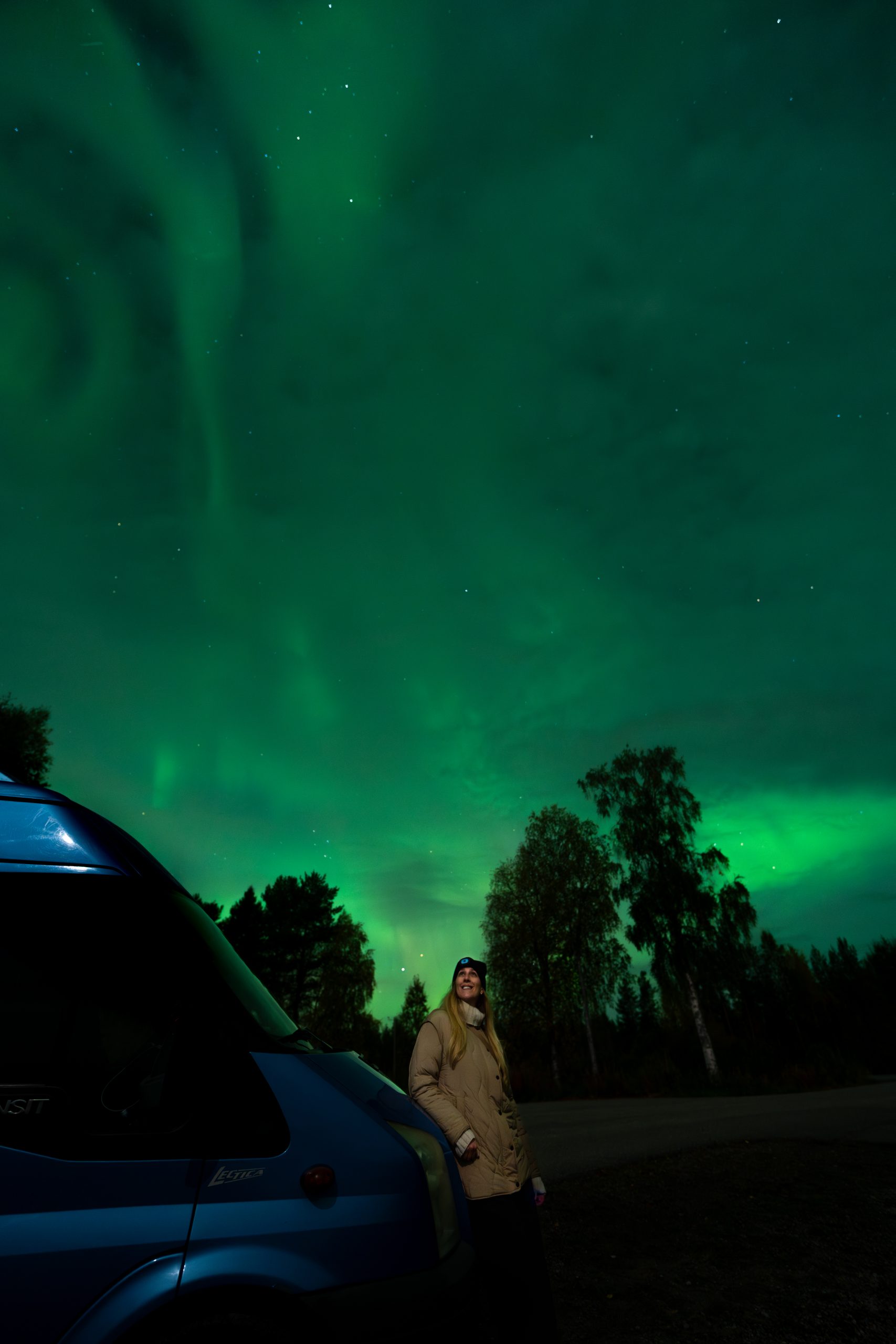
- Green: the most common color, created by oxygen around 100–300 km altitude.
- Red: oxygen at higher altitudes, above ~200 km.
- Purple, blue, pink: from nitrogen molecules, depending on energy and altitude.
Auroras take on many shapes: arcs, curtains, rays, or even diffuse glows. Their form is controlled by the structure of Earth’s magnetic field and how the particles flow along it.
When is the
BEST TIME TO SEE AURORAS?
The aurora can appear any time of year, but we can only see it when the sky is dark.
In the Arctic, this means the main aurora season runs from late August to early April. In summer, the “midnight sun” makes the sky too bright.
The equinox months — September and March — are especially good. Around these times, the tilt of Earth and the way the solar wind interacts with our magnetic field make geomagnetic activity more likely.
The
Equinox
Effect
This is also called the Russell–McPherron effect.
- Around the equinoxes (March and September), Earth’s axial tilt makes the orientation of the solar wind’s magnetic field interact more directly with Earth’s magnetic field.
- When the interplanetary magnetic field (IMF) points southward during these periods, magnetic reconnection happens more easily.
- Result → Auroras are more frequent and stronger around the equinoxes.
This doesn’t mean auroras only happen then, but statistically, activity is higher near September and March equinoxes.
QUICK TIPS
Aurora Photos with a Phone
Quick tips for better photos
- Use Night Mode (or Pro/Manual if available).
- Keep phone very still (tripod or rest it on something).
- Shutter 5–10 sec, ISO 800–1600 (if settings are available).
- Tap on the stars (or a faraway light) to focus.
- Turn off flash.
Ready to Book a lifetime experience?
Let's make your Aurora Dream Happen!
See you under the lights!

